
Sansui AU-111: The Legendary Valve Amplifier and Its Signature Sound
Some amplifiers reproduce music. Others make you want to play one more record. The Sansui AU-111 has spent six decades building a reputation for the latter.
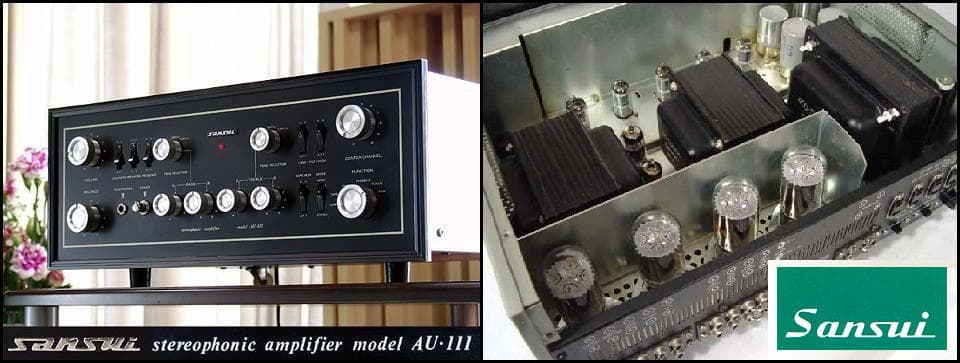
 Original Sansui AU-111. Photograph by Ookami-no-rei, released to the public domain via Wikimedia Commons.

A Japanese valve-era landmark
Introduced in 1965, the Sansui AU-111 is an integrated stereo valve amplifier from the period when Japanese hi-fi engineering was establishing its identity on the world stage. With its distinctive black fascia, gleaming silver controls and substantial chassis, it looks every bit as purposeful as it sounds. Unlike a minimalist power amplifier, the AU-111 combines amplification with versatile input selection and tone-shaping controls.
Its rated output is approximately 40 watts per channel into 8 ohms—a figure that may sound modest next to modern solid-state specifications, but is entirely capable in the right loudspeaker and room pairing. The original AU-111 ran from roughly 1965 to 1969; note that Sansui also produced a later AU-111 Vintage edition, which should not be confused with the 1960s model.
The AU-111 signature sound: warmth with presence
The AU-111's reputation rests on a blend of qualities that vintage audio enthusiasts often describe as full-bodied, fluid and involving. These are listening impressions rather than universal laboratory measurements: the actual result depends on the unit's condition, valves, restoration work, loudspeakers and room.
1. A vivid, expressive midrange
Voices, strings, piano and acoustic instruments are frequently described as the heart of the AU-111 experience. Enthusiast listening reports note a rich yet articulate midband, with vocals appearing present and naturally rounded. A well-recorded jazz vocalist or intimate acoustic performance is an especially compelling match.
2. Silky, easy-going treble
Rather than chasing a sharp, etched presentation, reviewers often hear a smooth and sweet upper range that can make longer listening sessions a pleasure. That does not mean the amplifier cannot reveal detail—only that its presentation is commonly perceived as more flowing than aggressive.
3. Weighty, tuneful bass
One of the AU-111's pleasant surprises is its sense of low-frequency body. Owners report convincing bass and midbass authority, although the outcome is speaker-dependent. With suitable speakers, it can provide satisfying drive without sacrificing its valve character.
4. A room-filling stereo image
Listeners also praise its depth and instrument separation: an engaging soundstage where musicians appear to occupy their own spaces, rather than collapsing into a flat line between the speakers.
Built for music, not just specifications
The AU-111 represents a period when integrated amplifiers were serious pieces of home audio equipment. Its robust construction, extensive controls and all-valve signal path are important parts of its appeal to collectors and restorers. It also illustrates why careful system matching matters: an amplifier's output power alone tells only part of the story.
Original AU-111: key specifications
- Type: stereo integrated vacuum-tube amplifier
- Introduced: 1965
- Rated output: 40 W per channel into 8 ohms
- Frequency response: 20 Hz–50 kHz (published specification)
- Speaker impedance: 8–16 ohms
- Approximate weight: 24.5 kg
- Approximate dimensions: 460 × 170 × 345 mm
Figures refer to published original-model specifications; check the particular unit and its service documentation before making electrical or speaker connections.
What should a buyer or collector look for?
Decades-old valve equipment deserves a proper technical assessment. Ask about capacitor replacement, power-supply health, transformer condition, valve testing, channel balance, hum and noise, and whether any prior modifications were documented. A sympathetic, properly executed restoration can matter more than cosmetic perfection.
Safety note: Valve amplifiers can retain dangerous high voltages even after being unplugged. Internal inspections and repairs belong with qualified technicians, not inexperienced owners.
Why the AU-111 still matters
The real magic of the Sansui AU-111 is not that every listener will hear it the same way. It is that generations of enthusiasts have returned to it for musical warmth, expressive vocals, expansive imaging and the tactile charm of classic Japanese engineering. For those drawn to the character of vintage valve hi-fi, it remains a fascinating reference point.
At Glass Audio, we celebrate the valves, components and craftsmanship that keep classic sound alive. Whether you are maintaining a treasured vintage amplifier or simply discovering valve audio, thoughtful component selection and professional servicing are the foundations of a rewarding listening experience.